

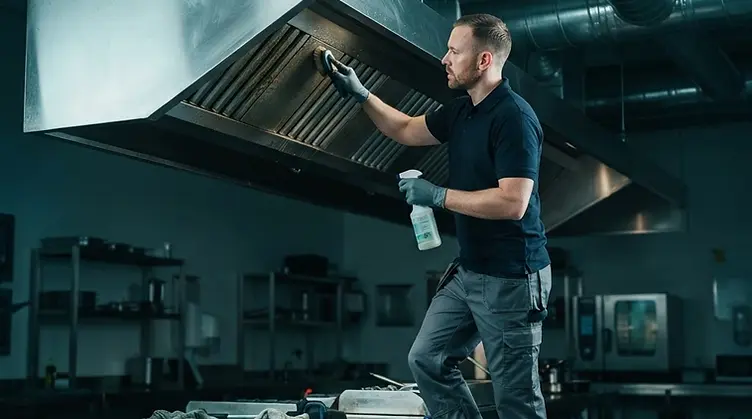
BESA & NAAD21 Qualified Engineers
When a fire officer, insurer or Environmental Health Officer asks whether your kitchen extraction system has been cleaned "to standard", the standard they mean is TR19® Grease — the Building Engineering Services Association (BESA) specification for managing fire risk from grease accumulation in kitchen extract systems.
At Extract Compliance Ltd every clean we carry out is performed by BESA-trained and AEME-qualified engineers working to TR19® Grease, TR19® Air and NAAD21. We do not subcontract, and we do not issue certificates for work we have not physically carried out. This article explains what those qualifications mean in practice, and exactly what a genuine TR19-compliant clean involves — from the access panels cut into your ductwork to the deposit-thickness readings and photographic evidence on your final certificate.
Why BESA Qualifications Matter
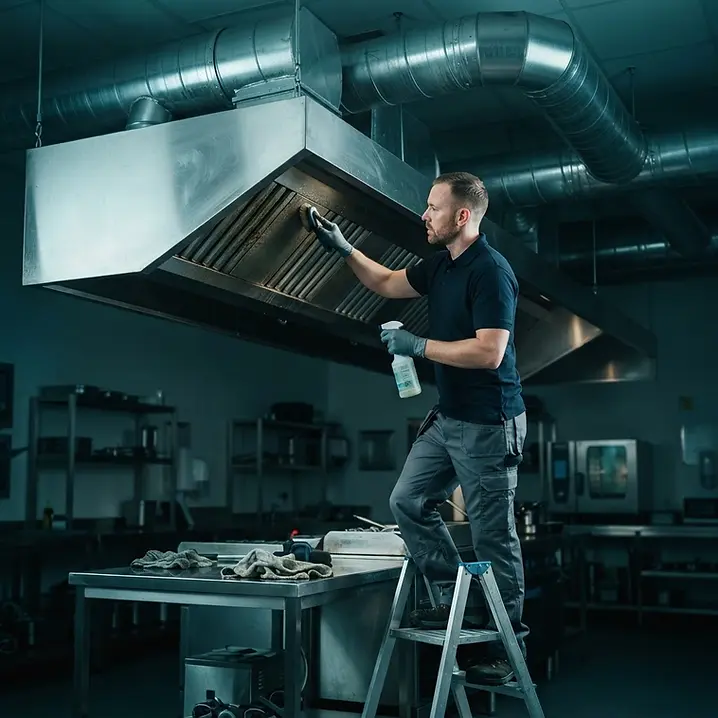
BESA (the Building Engineering Services Association) is the body that publishes and maintains the TR19® Grease standard. An engineer who is BESA-trained has been assessed against that specification — they understand how grease deposits form, where they accumulate, how to measure them, and how to remove them from every part of an extract system without simply pushing the problem further down the duct.
AEME (the Association of Evaporative and Mechanical Engineers) qualifications underpin the ventilation-hygiene competence our engineers hold. Together, BESA and AEME training mean that when we certify a clean, the certificate is backed by measured evidence rather than a visual "it looks fine" judgement.
| Accreditation | What it covers | | --- | --- | | BESA — TR19® Grease | Fire-risk management of grease in kitchen extract systems; cleaning specification, deposit measurement and certification | | BESA — TR19® Air | Cleanliness of ventilation duct systems generally (offices, hospitals, schools, commercial premises) to BS EN 15780 | | NAAD21 | The National Association of Air Duct Cleaners specification for access-panel placement so the full duct length can be reached, cleaned and inspected | | AEME | Ventilation-hygiene competence covering inspection, cleaning and post-clean verification |
What TR19® Grease Actually Requires
A genuine TR19 clean is not a surface wipe of the canopy and a certificate. TR19® Grease sets out a measurable, evidence-based process. In summary, a compliant clean requires:
- A full system clean — canopy interior and filters, plenum chamber, all horizontal and vertical duct runs, and the extraction fan including the impeller and housing.
- Access to every section — where ductwork cannot be reached, BS-compliant access panels are cut to the NAAD21 standard so the entire length can be cleaned and inspected.
- Measured deposit readings — grease deposit thickness is measured before and after cleaning at agreed test points. The TR19 target is a post-clean average below 200 microns.
- Photographic evidence — before and after images of every section cleaned.
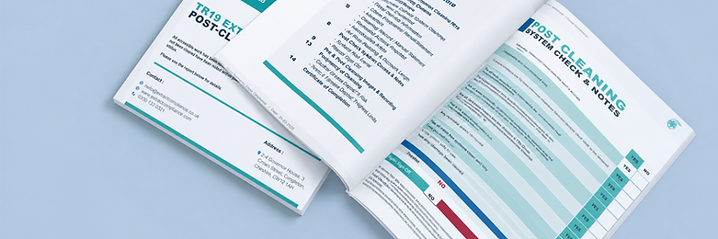
- A dated compliance certificate — issued on completion, holding the readings, photographs, a system schematic, the engineer's name and the recommended next inspection date.
| TR19® Grease requirement | How we evidence it | | --- | --- | | Full canopy-to-discharge clean | Recorded on the post-clean schematic with before/after photographs of every section | | Grease deposit measurement | Pre- and post-clean readings at each test point, targeting < 200 µm average | | Full duct access | Access panels cut and positioned to the NAAD21 standard | | Photographic evidence | Before and after images held on the certificate | | Documented certification | Dated TR19® Grease certificate with engineer name, schematic and next-due date |

How Often Should a System Be Cleaned?
TR19 does not set a single calendar interval. Cleaning frequency is driven by usage and deposit levels, assessed by your contractor at each visit. The BESA guidance below is the industry starting point:
| Usage level | Typical interval | Common examples | | --- | --- | --- | | Heavy use (12+ hrs/day) | Every 3 months | 24-hour restaurants, busy takeaways, high-volume hotel kitchens, food production sites running near-continuous service | | Medium use (6–12 hrs/day) | Every 6 months | Most independent restaurants, pubs, school kitchens, staff canteens and event venues serving two or three services a day | | Light use (2–6 hrs/day) | Every 12 months | Care homes, day nurseries, community halls and small cafés with limited daily cooking throughput |
These intervals are adjusted up or down based on the actual deposit thickness found during inspection. A busy wok kitchen may need quarterly cleaning even within "heavy use"; a light-use care-home kitchen with low deposit readings may safely extend toward twelve months. The point is that the decision is evidence-led, not a fixed date.
NAAD21 and the Access-Panel Problem
A common reason a previous "TR19 clean" fails an insurer's audit is that the contractor could not reach the internal ductwork. Grease does not deposit evenly — it concentrates where duct runs change direction, slow down, or pass through ceiling voids. If those sections cannot be reached, they cannot be cleaned or measured.
NAAD21 is the standard that governs where access panels are cut. Panels are positioned so that no more than a defined distance of ductwork is out of reach between openings, allowing the engineer to physically clean and photograph every bend, riser and horizontal run. Each new panel is recorded on the post-clean schematic, so the client and insurer can see exactly what was accessed.
| Problem without NAAD21 access | What happens with NAAD21-compliant panels | | --- | --- | | Internal duct runs unreachable | Panels cut so the full length can be cleaned and inspected | | No evidence of cleaned bends/risers | Every section photographed before and after | | "Looks clean" certification | Readings taken at every accessible test point | | Insurer rejects the record | Schematic shows exact panel positions for audit |
Why This Matters for Your Insurance
Compliance with TR19 is not a statute, but it is the document that fire safety authorities, insurers, Environmental Health Officers and the Regulatory Reform (Fire Safety) Order 2005 all reference when asking whether a Responsible Person has taken reasonable steps to manage fire risk in an extract system. In practice, most commercial insurance policies now require evidence of regular, documented TR19-compliant cleaning as a condition of cover — and a claim can be challenged, or even refused, where that evidence is missing.
A certificate issued by BESA-trained engineers, backed by deposit readings, NAAD21-compliant access and photographic evidence, is the document an insurer, fire officer or EHO will accept without question.


Free Site Survey
If you are unsure when your system was last cleaned, or you cannot locate your last TR19 certificate, contact us for a free site survey. We will measure your current grease deposit levels, assess what access is required, and tell you honestly what is needed — with no obligation.
Extract Compliance Ltd — BESA and AEME trained, working to TR19® Grease, TR19® Air and NAAD21 across Chester, Shropshire, Cheshire, Staffordshire, North Wales, Manchester and nationwide.