

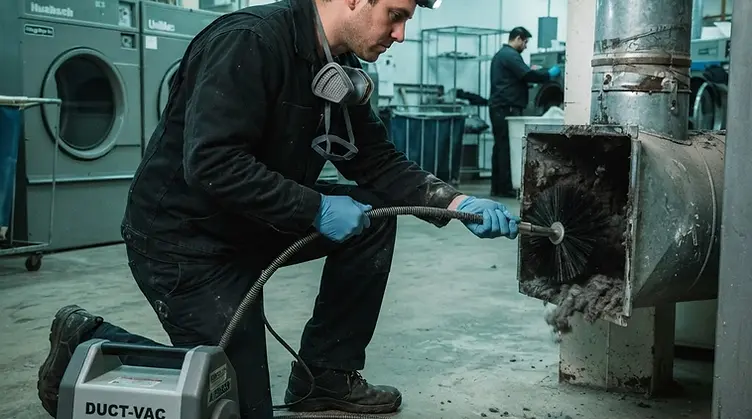
Lint is one of the most flammable materials found in any commercial building — and every load your tumble dryers run pushes more of it into your extract ductwork. In this guide we explain why laundry duct cleaning is essential, what the regulations and insurers expect, and how our TR19®-compliant laundry ductwork cleaning service keeps care homes, hotels, hospitals and commercial laundries safe and compliant.
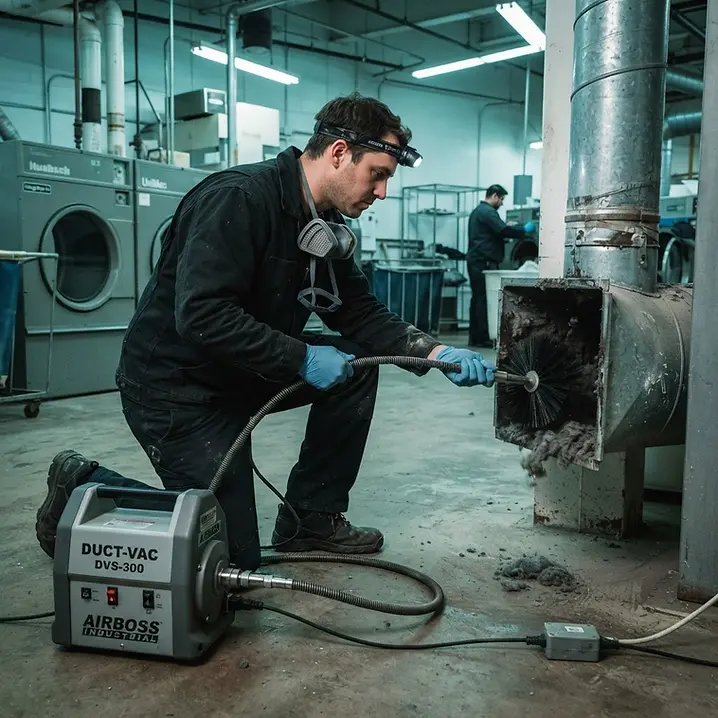
Why Lint Build-Up Is So Dangerous
Every drying cycle releases thousands of textile fibres. Your dryer's lint filter catches some of them — but a significant amount travels past the filter and settles inside the extract ductwork, coating bends, risers and terminations.
The problem is simple: lint ignites at a very low temperature and burns extremely fast. Combine that with the hot air a dryer pushes through the duct, and a blocked laundry extract becomes one of the most common ignition sources in laundry buildings. Once alight, fire spreads rapidly through vertical risers and ceiling voids — often well away from where staff would notice it.
The knock-on effects of a clogged duct
Even before it becomes a fire risk, restricted airflow causes real day-to-day problems:
- Longer drying times — dryers work harder and cycles take noticeably longer
- Higher energy bills — restricted extract forces machines to run hotter for longer
- Overheating machines — thermal cut-outs trip and motors burn out prematurely
- Poor air quality — humid, fibre-laden air lingers in the laundry room
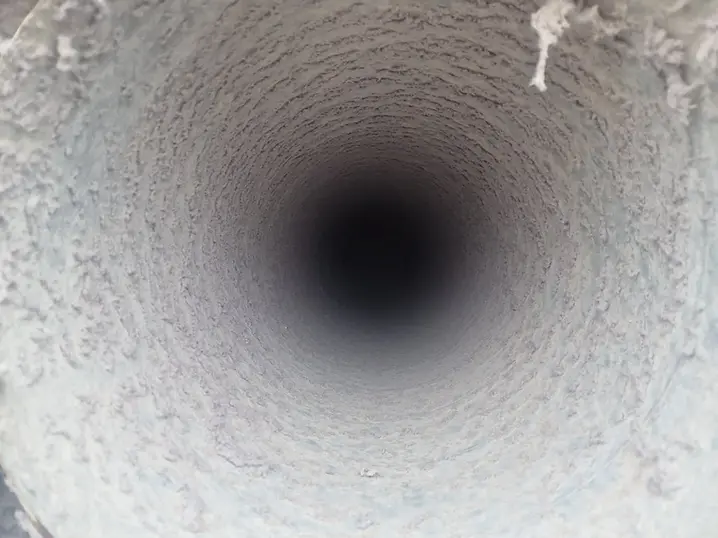
Above: combustible lint build-up found inside a real tumble dryer extract run before one of our cleans.
Is Laundry Duct Cleaning a Legal Requirement?
There is no single law that says "clean your laundry ducts" — but several overlapping duties make regular, documented cleaning effectively mandatory:
- Regulatory Reform (Fire Safety) Order 2005 — the Responsible Person must identify and manage fire risks. Lint is a well-known ignition source, so an uncleaned laundry extract leaves your fire risk assessment exposed.
- BESA TR19® — the recognised industry standard treats laundry extract as a combustible-deposit system, cleaned and verified to the same evidenced standard as kitchen grease extract.
- BS 9999 — fire safety guidance requires ventilation and extract systems to be maintained so they do not contribute to fire spread.
- Insurer requirements — most insurers expect documented cleaning of combustible-deposit extract systems. Missing records can give an insurer grounds to challenge or refuse a fire claim.
In short: if you operate commercial tumble dryers and can't produce a dated cleaning certificate, you have a compliance gap.
Who Needs This Service?
Laundry duct cleaning is essential anywhere commercial dryers run regularly:
- Care homes & nursing homes — high daily throughput and vulnerable residents
- Hotels & guesthouses — in-house laundries running around the clock
- Hospitals & NHS buildings — strict fire safety and infection control duties
- Commercial laundries & launderettes — the highest lint loads of all
- Facilities management companies — responsible for multi-site compliance
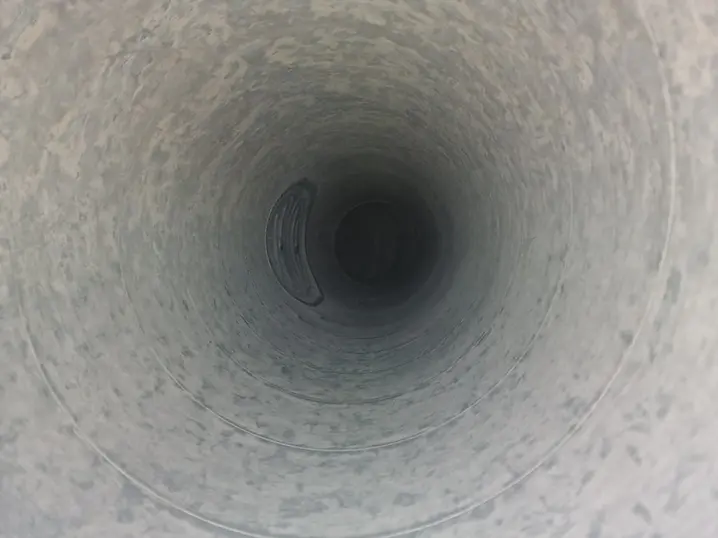

Above: the same duct run after our clean — bare metal restored, fire load removed and drying times improved.
What Our Laundry Duct Cleaning Includes
Our engineers follow a thorough, evidenced process on every job:
- Survey of every dryer and its extract route, including shared risers and hidden bends
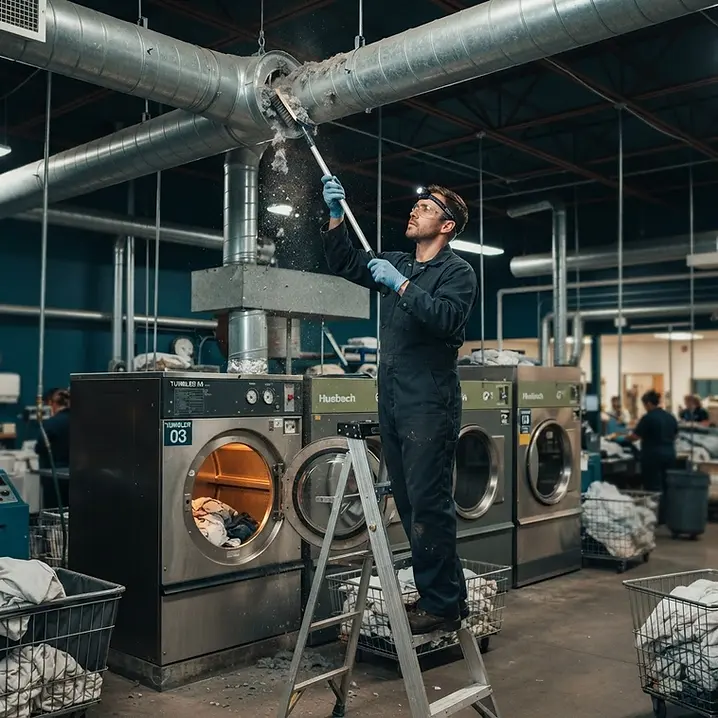
- Dryers isolated; lint filters, drawers and internal cabinets cleared of fibre build-up
- Access panels opened — or newly fitted to NAAD21 — so the full length of the run can be cleaned
- Mechanical brushing, air whipping and HEPA-filtered vacuum extraction right through to the external termination
- External cowls, grilles and bird guards cleared and checked
- Airflow verified at the dryer and termination on completion

Documentation Your Insurer Will Accept
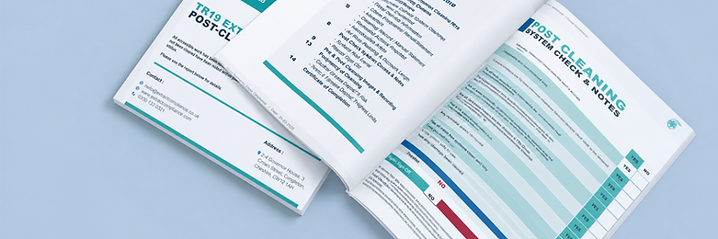
Every clean ends with a dated compliance certificate and full photographic report — before and after images, a job summary and a recommended cleaning interval based on your throughput. This slots straight into your fire risk assessment and satisfies insurer policy conditions.

How Often Should Laundry Ducts Be Cleaned?
For most care homes, hotels and NHS facilities we recommend cleaning every 6–12 months, depending on usage. High-throughput commercial laundries may need more frequent visits. We'll assess your system and recommend the right interval — and remind you when the next clean is due.
Book Your Laundry Duct Clean
Extract Compliance Ltd provides TR19®-compliant laundry ductwork cleaning across Cheshire, Shropshire, North Wales and nationwide. Our engineers work out-of-hours where needed, so there's minimal disruption to your laundry operation.
👉 Read more about our Laundry Ductwork Cleaning service, or contact us today for a free, no-obligation quote on 0330 133 8231.